“Recycling starts with design” – How Saubermacher and MM Board & Paper keep valuable fibres in the loop

It is a common misconception that anything made primarily from paper or cartonboard is automatically easy to recycle. The team at international waste management and recycling company Saubermacher knows that successful recycling depends on the quality of the recovered material, suitable packaging design and close cooperation throughout the value chain.
“Not all recovered paper is the same,” says Mathias Hobisch, Saubermacher’s Head of Material Flow Management. “Moisture, food residue, plastics, glass, metal or residual waste can make processing more difficult, reduce the fibre yield and create additional costs. The cleaner and more accurately sorted the collected material is, the more effectively its fibres can be recovered and used in new products.”
Hobisch joined Saubermacher’s Material Flow Management team in 2022 and has headed its Recyclables division since 2024. In this role, he is responsible for the strategic and operational management of secondary raw material flows.
Operating across 80 locations in eight countries, Saubermacher’s role spans collection, inspection, sorting and preparation. This work provides manufacturers with the high-quality secondary raw materials on which the circular economy depends.
Saubermacher is an important regional supplier of recovered paper to MM Board & Paper’s Frohnleiten mill, including material collected from households across Styria. This creates a direct regional connection between collection, sorting and the production of new recycled cartonboard.
Fibre quality, protected at every stage
Protecting the quality of recovered fibres is central to Saubermacher’s work. Quality assurance begins as soon as the material arrives, with checks on its origin, composition, moisture content and potential contamination.
“High-quality material reduces losses, conserves energy and resources, and improves the commercial viability of the entire recycling process,” explains Hobisch. “Good separation is therefore the foundation of a functioning circular economy.”
“We inspect the material and remove contaminants,” says Hobisch. “The processed recovered paper is then normally transported to paper and board mills, either loose or compressed into bales. At the mill, water is used to separate the fibres from the material. The fibres are then cleaned and prepared for the manufacture of new paper and board products. In this way, used packaging becomes a valuable raw material for the next generation of products.”
Adapting to a changing waste stream
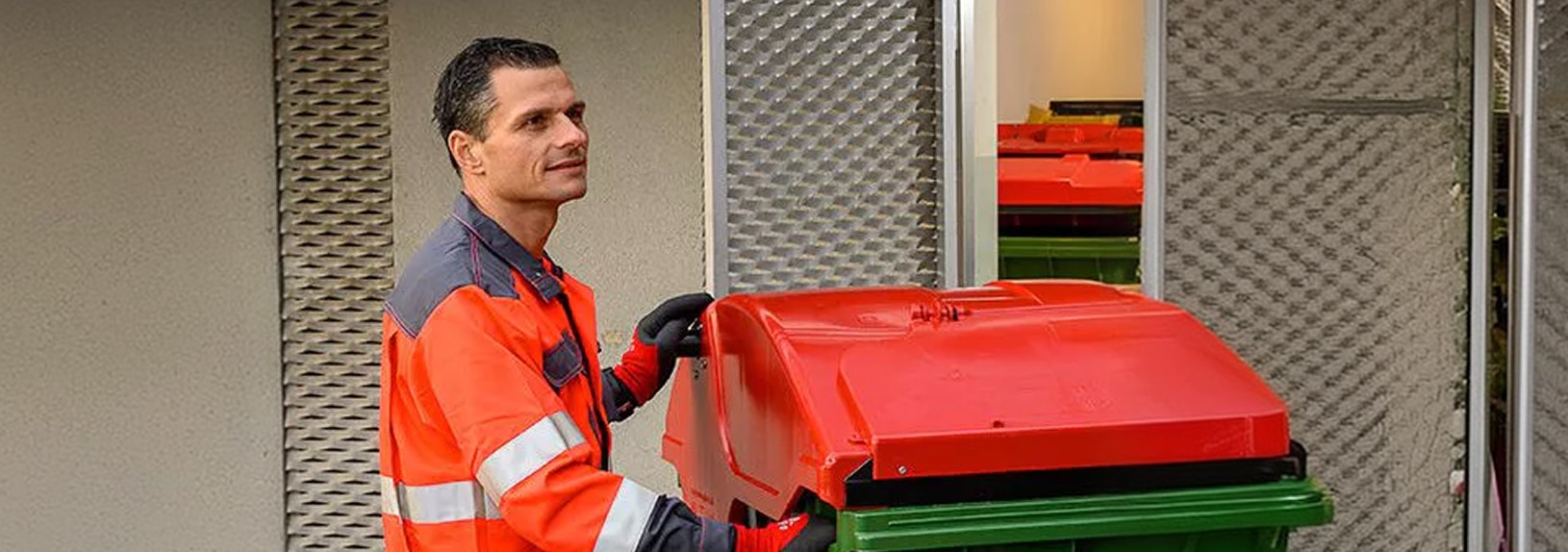
The material streams handled by Saubermacher are becoming increasingly challenging. Increasingly complex packaging structures are entering the recycling stream, including coated papers, composite materials, and strong adhesives. These materials must be identified, separated and directed to the appropriate recycling or recovery processes.
At the same time, the composition of the recovered paper stream is changing.
“While the volume of graphic paper available is declining, the proportion of packaging and cartonboard is increasing,” explains Hobisch. “This is changing the volumes handled by collection systems, the fibre qualities available and the demands placed on collection, sorting and recovery.”
Closing the loop, together
Close cooperation between waste management companies and board and paper manufacturers ensures that recovered material meets the required specifications and can be effectively reused. By coordinating volumes, quality requirements and material specifications, Saubermacher and its manufacturing partners help return valuable fibres to the production cycle.
“Only the right recovered material, at the right quality, can become a high-quality new product,” says Hobisch.
This is where manufacturers such as MM Board & Paper play a decisive role. At its Frohnleiten mill, MM Board & Paper uses recovered fibres to produce new recycled cartonboard, keeping valuable raw materials in circulation.
Stable demand for recycled cartonboard is essential to this process. It creates a reliable market for secondary fibres, provides planning certainty and supports investment in modern recycling infrastructure. Without manufacturers using these fibres in new products, the recycling loop would remain incomplete.
Genuine circularity therefore depends on every stage working together: packaging designed for recycling, effective collection systems, high-quality sorting and manufacturers that turn recovered fibres into new products.
“Our message is clear: design for recycling, use recycled cartonboard and take responsibility for the entire cycle,” says Hobisch. Closing the loop requires strong partnerships between waste producers, collection and sorting companies, mills, packaging manufacturers and brand owners.
Paper fibres can be recycled over 25 times in laboratory conditions without losing strength properties. Research by MM Board & Paper and TU Graz shows that fibres maintain their integrity through multiple cycles, providing strong environmental credentials and supporting circular economy goals. The exact number of cycles in the market depend on maturity of recycling systems and various external factors. Recycled cartonboard prevents downcycling of fibres.
Volumes of graphic paper are declining while packaging and cartonboard volumes are rising, changing the type and quality of fibre available and the demands placed on collection and sorting systems.
Even well-sorted material needs a buyer. Without stable demand for products made from recycled fibres, there is no reliable market for the recovered material and the circular process remains incomplete.
MM Board & Paper uses recovered fibres supplied by partners such as Saubermacher to produce new recycled cartonboard or recycled liner, creating a reliable market for secondary fibres and completing the loop.
Packaging designers can support recycling by keeping structures as simple as possible and using only the coatings, adhesives and composite materials required for the product’s performance.