What your packaging says about your brand
Before consumers read your product claim, they read your packaging. What they see on the shelf shapes how they perceive your brand, whether they trust your sustainability communication, and whether your product deserves a place in their basket. In other words: packaging often makes the first impression.
White Lined Chipboard (WLC) plays a key role in this decision. This recycled and recyclable cartonboard helps brands create packaging that signals responsibility at first glance.
Why recyclability matters to consumers
Sustainability is no longer a niche concern. Climate change remains one of the top global issues for consumers, ranking just behind the cost of living and warfare. At the same time, many consumers see recycling as one of the most tangible actions they can take — around 60% point to it as the most effective way to fight climate change.
This expectation translates directly into packaging preferences. ’Easy to recycle’ is the number one packaging feature consumers look for – even more important for older generations according to Pro Carton’s 2026 consumer survey. For brand owners, this creates a clear message: recyclability is no longer a nice-to-have. It is becoming a baseline expectation.
That expectation comes with a material-specific verdict: Cartonboard and paper are the packaging materials consumers trust most to actually be recycled, with 87% expressing trust in the material category – ahead of glass, metal and every category of plastic. This is a general cartonboard finding and it reflects trust in the material category. WLC builds on this strength by adding recycled content to the equation – helping brands show that fibres are not only recyclable but already being kept in circulation.
Packaging influences brand choice
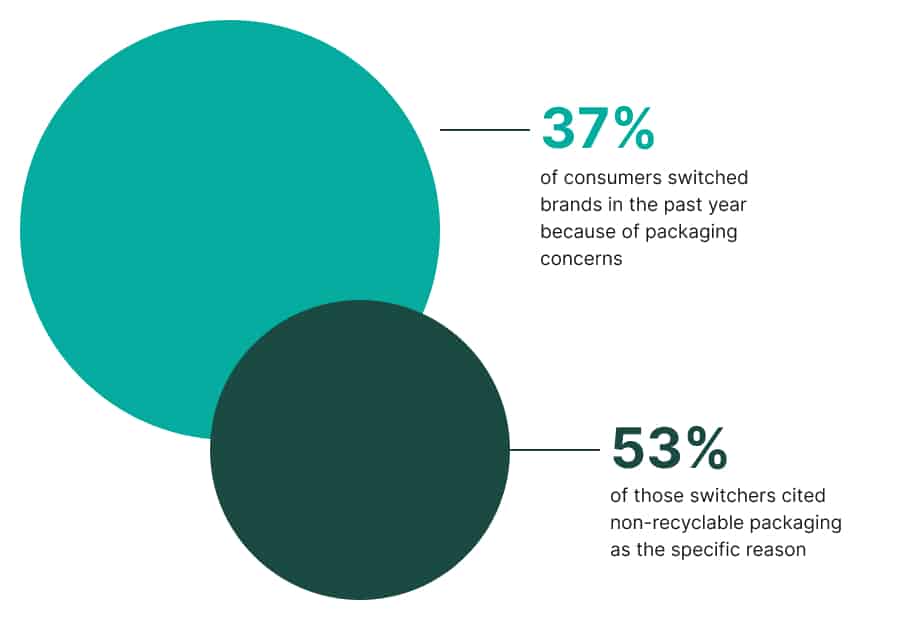
Trust in a material can translate into purchasing behaviour at the point of sale. According to the same Pro Carton survey, 37% of consumers have switched brands in the past year because of packaging concerns, and more than half of those switchers – 53% – cited non-recyclable packaging as the specific reason. Switching driven by packaging is highest among 18-29-year-olds, where more than half report having done so.
Perspectus Global’s research adds a complementary, slightly broader picture: 45% of consumers say they have chosen a brand in the past 12 months because of its packaging, rising to 59% among 18-29-year-olds.
For brands, this means packaging can work in both directions. It can strengthen preference when it clearly reflects consumer expectations – or create hesitation when it does not. Material choice is therefore not only a technical or procurement decision. It is part of the brand experience.
How recycled cartonboard builds trust
Recycled cartonboard adds a powerful layer to the overall cartonboard story. Consumers increasingly associate recycled content with responsibility.
In Perspectus Global’s research, 80% of consumers say a brand using recycled cartonboard appears more responsible than one using virgin fibre cartonboard – with 33% saying ‘much more responsible’, and 47% saying ‘somewhat more responsible’.
The preference is also visible when consumers are offered a direct choice. 69% say they prefer recycled cartonboard over virgin fibre cartonboard when offered the same packaging.
McKinsey’s packaging survey adds a further perspective: recycled content now ranks among the top three sustainability characteristics that European consumers look for in packaging, behind recyclability and reusability. Together, these findings show that recycled cartonboard adds a distinct responsibility signal to the strong sustainability story of fibre-based packaging.
What this means for brand and packaging teams
The message is clear: packaging is now part of the sustainability conversation between brands and consumers. Recyclability is expected. Recycled content is valued. And packaging concerns can influence brand choice.
WLC gives brands a practical way to respond to these expectations. It supports a circular use of fibres, strengthens the perception of responsibility and makes sustainability visible in everyday packaging. For packaging teams, it offers a proven material solution. For brand teams, it creates a credible communication opportunity.
Choosing WLC means choosing packaging that reflects what consumers increasingly expect: recyclability, responsibility and true circularity.
Explore MM Board & Paper’s WLC portfolio to find the right recycled cartonboard solution for your packaging application: Recycled Cartonboard (WLC Board) – MM
FAQs
White Lined Chipboard, or WLC, is a cartonboard made mainly from recycled fibres. It is widely used for folding cartons in areas such as food, personal care and other consumer goods packaging.
Recyclability and recycled content are now among the most important packaging attributes to shoppers, often ranking ahead of design or brand image, because they signal environmental responsibility.
Yes. Independent surveys show a majority of consumers say packaging sustainability influences their choices, and a significant share have both chosen and rejected products based on packaging alone.
Full product information, technical datasheets and sample requests are available in the MM Board & Paper product catalogue.