WLC – less resource input, lower production impact
The environmental impact of packaging begins long before a pack reaches the shelf. It starts with material choices, the resources required to produce them and how efficiently fibre can be kept in high-value circulation.
White Lined Chipboard (WLC) supports lower-impact production because it is made from recovered fibre that has already been processed. This can reduce the additional resource input needed, while giving brand owners and converters a material option that performs reliably in production and on the shelf.
What ‘lower impact’ means in practice
The advantage of WLC starts with the fibre itself. Because recovered fibres have already passed through an initial production cycle, manufacturing recycled fibre cartonboard can require less energy and water than producing comparable virgin fibre grades. Less processing translates directly into lower energy demand and lower water demand at the production stage, and reduces how much virgin fibre needs to be drawn into the system in the first place.
The pulp and paper sector is energy-intensive, and reviews of decarbonisation in the industry point to these levers – less reliance on virgin fibre, better process efficiency, and higher recycled output – as the core pillars of lower-impact production. The European Environment Agency highlights circular economy measures as a way to cut climate impact by reducing material demand and keeping resources in use for longer.
What the data shows
As one of the few cartonboard producers offering both virgin and recycled fibre grades, we have comprehensive first-hand insights into both production routes. This allows us to compare their respective resource requirements from a balanced perspective.
MM Board & Paper production data shows that recycled cartonboard requires fewer resources than virgin fibre cartonboard:
- Energy use: Producing MM recycled cartonboard uses approximately two-thirds less energy, as the recycled fibres have already undergone initial processing.
- Water use: Producing MM recycled cartonboard uses approximately half as much water, for the same reason.
- Virgin fibre demand: Using recycled fibres reduces the need for virgin fibre, helping to preserve forest resources and support biodiversity.
These figures are based on MM Board & Paper production data and are not intended as universal industry averages. Nevertheless, they indicate a clear overall trend: using recycled fibres can reduce the energy and water required to produce finished cartonboard while lowering demand for virgin fibre.
These results demonstrate lower energy and water use in the assessed MM production routes, but they should not be interpreted as proof that WLC always has a lower carbon footprint than virgin fibre alternatives. Carbon performance depends on factors such as mill configuration, energy sources and the share of on-site renewable energy. As a producer of both grades, MM Board & Paper sees that variation directly, and it is part of why the carbon comparison needs to be made with care.
A reliable material choice
WLC combines recovered fibre with reliable cartonboard performance. Research by MM Board & Paper and TU Graz supports this position, challenging the long-standing assumption that paper fibre can only be recycled around seven times before losing usable strength. The study found that fibres could complete more than 25 laboratory recycling cycles without a systematic loss of the strength properties that matter for cartonboard performance.
These findings relate to fibre potential under controlled conditions and do not provide a guarantee of what happens at scale. In practice, collection and processing losses remain the limiting factors on how many times fibre actually circulates. However, the findings help reframe what recycled fibre is capable of and support treating WLC as a durable, repeatable material choice.
Matching the grade to the application
At MM Board & Paper, we produce both FBB and WLC, so we see clearly where each grade fits and where recycled content strengthens the overall system. For many suitable applications, WLC offers a strong circularity profile and a lower production-stage footprint.
By matching the right grade to the right application, packaging teams can reduce production-stage impact, support reliable packaging performance and help unlock the full potential of every fibre.
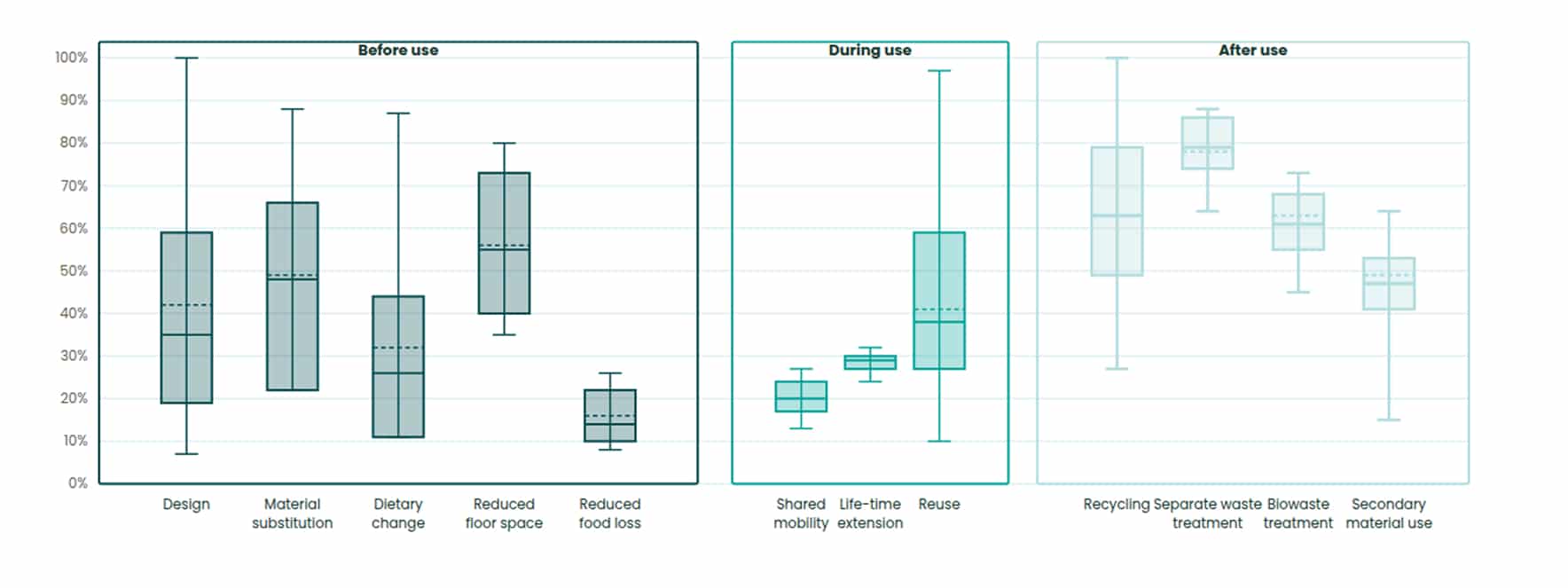
Source: ETC 2026 report. Climate mitigation contributions from circular economy actions, European Topic Centre Circular Economy and Resource Use (ETC CE)
FAQs
WLC is made from recovered fibres that have already been pulped, refined and processed. This can reduce the additional processing needed to produce new cartonboard, helping lower energy and water demand at the production stage.
Reducing energy use, water use and demand for virgin fibre at the production stage can support broader sustainability goals without changing the core function of the packaging.
WLC can be specified as a high-performing cartonboard with a circular fibre profile and lower production-stage impact.