Your packaging speaks for your brand: why recycled content is becoming a stronger brand signal

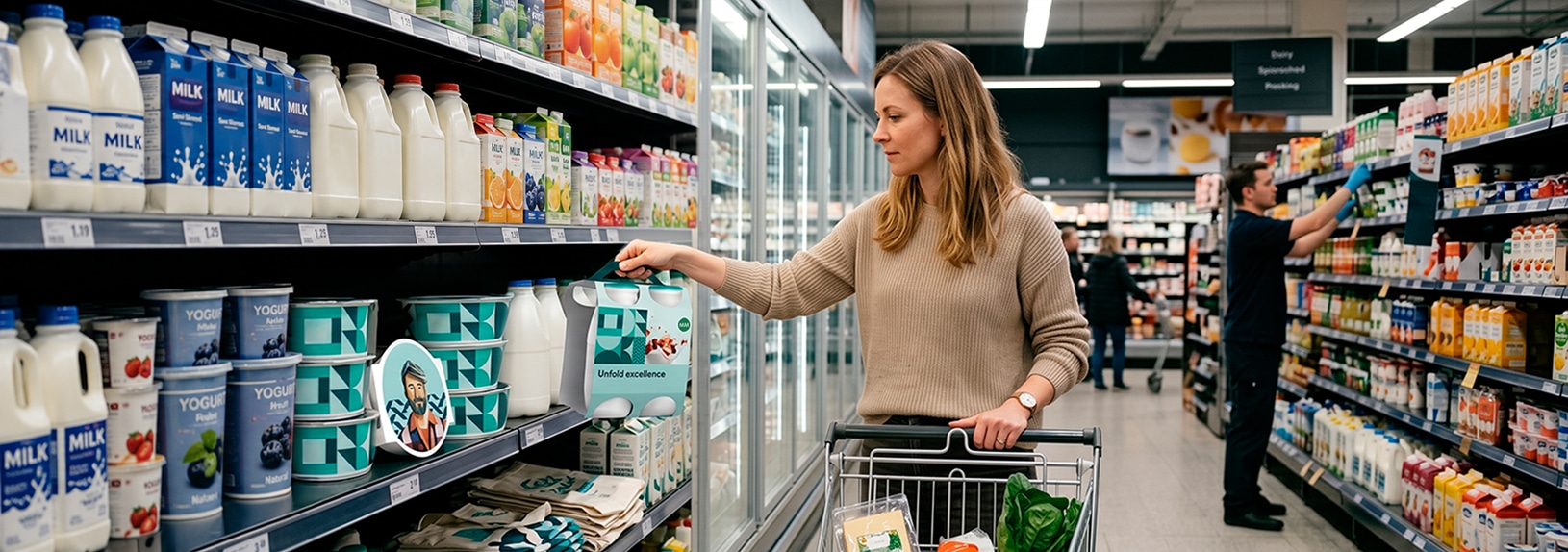
Packaging does one of its most important jobs before it is ever opened. A consumer picks up a product, notices the design, reads the label, feels the material, and forms an impression within seconds. Long before they experience what is inside, they have already started to form an opinion about the brand.
For many years, that first impression was shaped primarily by visual and tactile cues such as colour, typography, finish, and structure. Those elements still matter, but the way consumers read packaging is changing. Sustainability has become part of that first judgement, and recycled content has emerged as one of the clearest signals of all.
Consumers are speaking loud and clear
The data is now strong enough to treat packaging sustainability as a commercial factor, not just a reputational one. Research by Perspectus Global found that 66% of consumers say the sustainability of packaging affects their purchasing decisions, either strongly or somewhat. Just as importantly, 45% said they had chosen a brand in the past year because of its packaging, while 38% said they had stopped buying a product because of packaging concerns. Among younger consumers aged 18 to 29, packaging has an even stronger influence: 59% said they had chosen a product because of its packaging.
These are important signals for brand owners. They suggest that packaging is no longer simply a functional layer around the product or a passive carrier of brand design. It is increasingly part of the decision-making process itself.
Recycled cartonboard performs especially well in that context. In the same Perspectus Global research, 80% of respondents said that a brand using recycled cartonboard appears more responsible than one using virgin fibre board. In addition, 69% said they would prefer recycled cartonboard over virgin fibre if offered otherwise equivalent packaging.
That finding is reinforced by the McKinsey Packaging Survey, 2025, which found that sustainability and recyclability outrank design and brand image as vital parts of packaging, while packaging made with recycled content ranks third among sustainability characteristics.
Taken together, these findings show that sustainable packaging is no longer a niche concern. It now sits alongside price, product quality, and convenience as a factor shaping purchasing decisions across mainstream categories. More importantly, consumers are not reacting only to abstract sustainability claims. They are making concrete associations between packaging materials and brand responsibility.
The gap between material choice and brand story
This is where many companies still miss an opportunity. In practice, packaging material decisions and brand positioning decisions are often made in separate discussions by different teams. Packaging teams optimise for performance, availability, compliance, and cost. Brand and marketing teams focus on positioning, communication, and consumer perception. When those conversations remain disconnected, the potential to turn a packaging material into a brand asset is often lost.
That matters because the material itself is already communicating something. If 66% of consumers say packaging sustainability affects their purchasing decisions, and 45% say they have chosen a brand because of its packaging, then material choice is no longer just a technical or procurement decision. It is part of how the brand is judged on shelf.
This is where recycled cartonboard, and WLC in particular, has an underused advantage. It gives brands something tangible and credible to stand on. Rather than relying on vague sustainability messaging, brands can build on a material choice that is associated with recycled content, established recyclability, and stronger perceptions of responsibility.
In other words, recycled cartonboard is not only a packaging solution. It can also be a signal of intent. It tells consumers that a brand is making a visible, material choice that aligns with circularity and resource efficiency. That can be especially powerful in categories where consumers are making rapid comparisons and decisions at the point of sale.
Making the connection earlier
The brands that are likely to extract the most value from recycled cartonboard are the ones that plan for it deliberately. They do not treat it as a late-stage compliance decision or a background procurement choice. Instead, they bring the material decision into the broader brand narrative from the outset.
That means connecting packaging, sustainability, and marketing teams earlier. It means understanding not only what a material does operationally, but what it communicates commercially. And it means recognising that on-pack claims, design language, and material choices are often read together by consumers as part of one overall brand impression.
Used well, recycled cartonboard can do more than improve circularity credentials. It can strengthen trust, support a more responsible brand image, and reinforce the sense that a brand is making thoughtful choices before the product is even opened.
Packaging speaks for the brand long before the product gets a chance to speak for itself. More and more, recycled content is part of what consumers hear.
If you’d like to understand how MM Board & Paper’s WLC portfolio can support your packaging claims, our team is ready to help. Get in touch at sustainability@mm.group.