Assessing Nature-Related Risks and Opportunities at MM Group, Aligned with ESRS
Understanding where a company interacts with nature and how significant those interactions are was the starting point. Following the Locate and Evaluate phases of the Taskforce on Nature-related Financial Disclosures (TNFD) LEAP framework (LEAP stands for Locate, Evaluate, Assess and Prepare), the Assess phase translates insight into the basis for strategic decision-making that enables better outcomes for the company, its value chain, and the biodiversity surrounding its operations.
The Assess phase converts context to a structured analysis of risks and opportunities that could affect strategy, operations, financial performance and long-term resilience. The approach is closely aligned with the European Susainabiliy Reporting Standards (ESRS), particularly ESRS E1 to E4, which cover climate change, pollution, water and marine resources, and biodiversity and ecosystems. This alignment ensures consistency between internal risk management and external sustainability reporting.
The Role of Assessment in Business and Nature
The purpose of the Assess phase is to determine which nature-related issues are material and how they should be managed and disclosed. It bridges environmental understanding with business relevance, helping MM Group answer: Which risks could threaten our operations, supply chain or reputation? Which opportunities could enhance resilience, innovation and stakeholder trust?
For MM, the Assess phase enables:
- Identification of material nature-related risks and opportunities.
- Evaluation of financial, operational and strategic implications.
- Prioritisation of issues for management action and disclosure.
- Strengthened compliance with evolving regulation, including the EU Deforestation Regulation (EUDR).
This approach ensures that assessment benefits MM, its suppliers, customers and surrounding ecosystems, moving beyond mere reporting obligations.
Nature-Related Risks and Opportunities, Aligned with ESRS
Categories of Risk
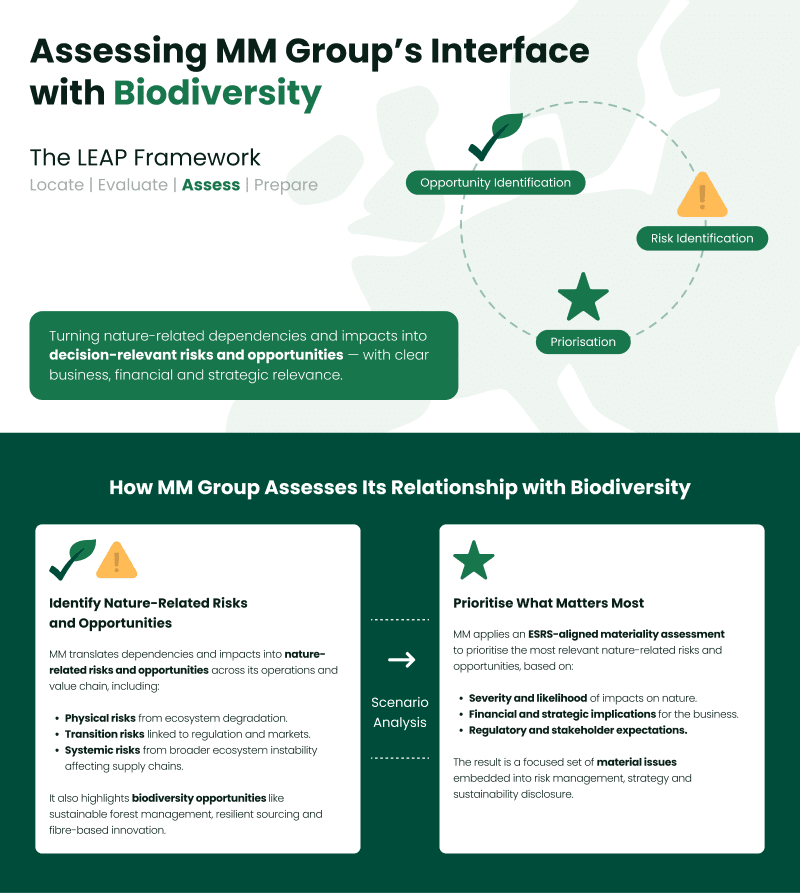
Consistent with TNFD guidance and ESRS E4, MM Group considers three main risk types:
- Physical risks: arising from ecosystem degradation, such as declining forest health, water scarcity or biodiversity loss affecting fibre availability.
- Transition risks: linked to regulatory, market or societal changes, including stricter EUDR requirements, shifts in customer expectations toward deforestation-free products and liability or reputational risks.
- Systemic risks: broader ecosystem instability that can disrupt entire value chains or economic systems, particularly relevant in nature-dependent sectors like forestry and packaging.

Identifying Opportunities
Assessment also identifies biodiversity opportunity areas where proactive action can benefit both nature and business:
- Strengthening sustainable forest management practices.
- Developing fibre-based packaging solutions aligned with customer sustainability goals.
- Enhancing resilience through ecosystem restoration and diversified sourcing.
By analysing dependencies and impacts together with potential opportunities, MM ensures that assessment is actionable and forward-looking.
Translating Dependencies into Business-Relevant Insights
A central task of the Assess phase is converting dependencies and impacts into clear risk and opportunity statements, captured in a structured risk register covering MM Group’s operations and key suppliers. Examples include:
- Dependence on healthy forests becoming a physical risk if drought, pests or forest degradation reduce timber availability.
- Exposure to land-use change becoming a transition risk if sourcing practices do not align with expectations on what counts as forest destruction.
- Proactive sourcing policies becoming an opportunity to strengthen market positioning and stakeholder trust.
Scenario analysis is integrated into this process to test the resilience of the business under plausible futures. Scenarios may include:
- Increased drought frequency in key wood-sourcing regions.
- Stricter enforcement of the EUDR.
- Accelerated shifts in customer demand toward low-impact, fibre-based packaging.
This approach helps MM anticipate risks before they materialise, explore adaptation measures and seize new business opportunities.
Double Materiality and Prioritisation
Not all identified risks and opportunities are equally significant. MM Group applies double materiality to focus on what truly matters:
- Impact materiality: how MM’s operations affect nature, including forests, water and biodiversity.
- Financial materiality: how ecosystem changes could alter MM’s business performance, such as supply disruption, cost volatility, or regulatory exposure.
Each risk and opportunity is assessed for environmental significance, financial impact, and stakeholder relevance. Only items exceeding defined thresholds are prioritised, resulting in a concise list of material issues, such as:
- Concentration of wood sourcing in water-stressed regions.
- Exposure to regulatory non-compliance under the EUDR.
- Strategic opportunities with customers requiring certified sourcing and ecosystem stewardship.
This ensures that MM focuses on actions that deliver real benefits for both business and biodiversity.
Embedding Assessment into Strategy and Governance, Aligned with ESRS
Governance and Oversight
Nature-related risks and opportunities identified through assessment are integrated into MM Group’s enterprise risk management and strategic decision-making. Oversight is provided at Management Board level, ensuring alignment with overall corporate strategy.

From Assessment to Action
Assessment outcomes inform:
- Investment and sourcing decisions.
- Supplier engagement and due diligence.
- Long-term initiatives aligned with a credible biodiversity action plan.
This integration also supports compliance with regulatory frameworks and voluntary initiatives, reinforcing transparency and accountability.
External Recognition of Assessment and Sustainability Leadership
External organisations regularly recognise MM’s approach to assessing nature-related risks and opportunities:
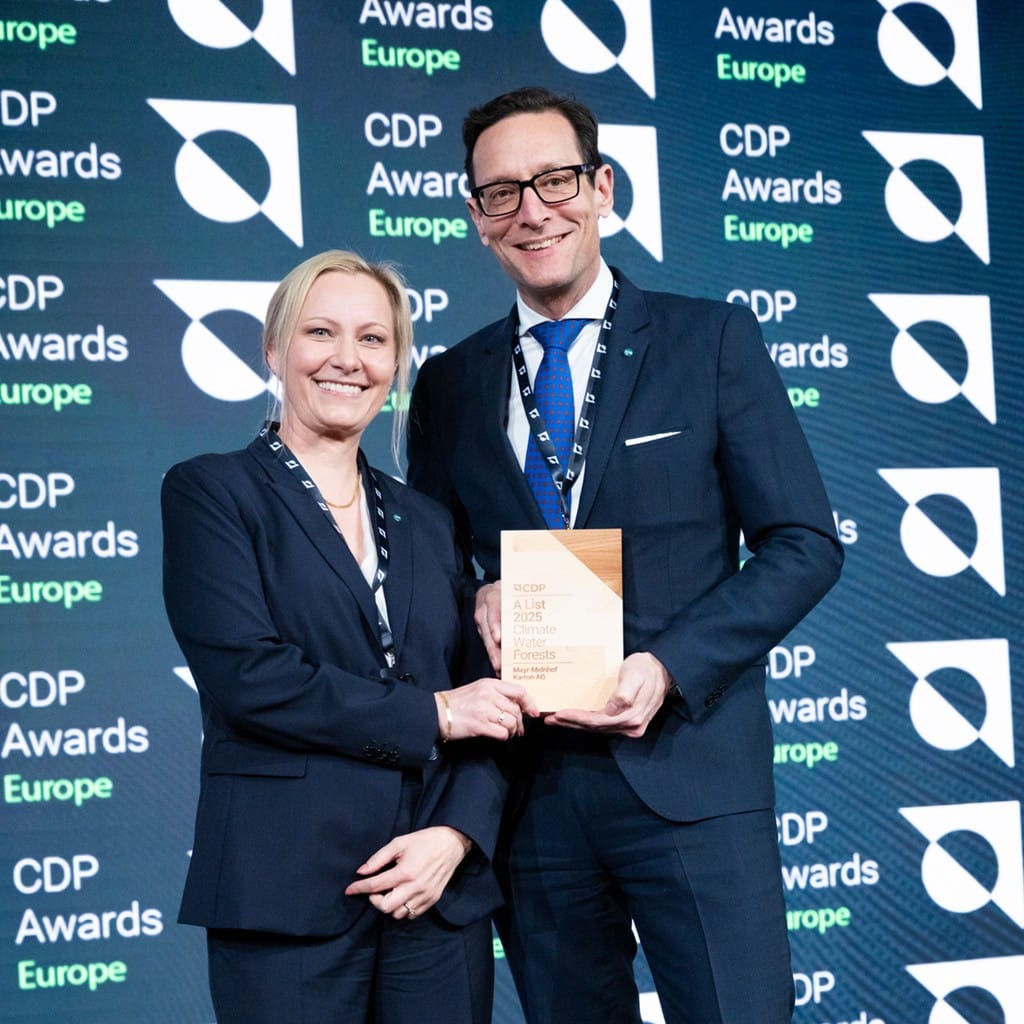
- Achieved an “A” Leadership rating from CDP in Climate, Forests and Water, reflecting transparency and robust environmental management.
- Earned a Gold rating from EcoVadis, covering environment, labour and human rights, ethics, and sustainable procurement.
These recognitions demonstrate alignment between rigorous assessment, strategic action, and measurable sustainability performance.
In conclusion, the Assess phase of the TNFD LEAP approach enables MM to move from understanding nature-related dependencies and impacts to managing them in a structured, strategic way. By aligning assessment processes with ESRS E1 to E4, MM ensures that nature-related risks and opportunities are evaluated consistently, prioritised transparently and embedded into decision-making that benefits stakeholders and reduces environmental impact.