Evaluating Materiality: Understanding both Dependencies and Impacts on Biodiversity at MM Group
Following the first article, Locating Nature: How MM Group Maps Its Interface with Biodiversity, this second part explores the next stage of the TNFD LEAP framework: “Evaluate.” This phase focuses on understanding the scale and scope of MM Group’s dependencies on nature, as well as impacts its activities can have on biodiversity.
The “Locate” phase identified where MM interacts with nature; the “Evaluate” phase now examines how these interactions matter. This includes assessing the condition of ecosystems encompassing forests, rivers, and other features to understand how MM’s operations can influence them.
The TNFD LEAP Framework in Context
The “Evaluate” phase analyses the scale and scope of nature-related dependencies and impacts at each identified location. It builds on the “Locate” phase by transforming mapped interfaces with nature into measurable insights that inform strategic decision-making.
- Dependencies describe how MM Group’s operations and supply chain rely on ecosystem services such as healthy forests, clean water and fertile soils.
- Impacts refer to how those same activities — from wood sourcing to production — affect the ecosystems they depend on.
In practice, this involves quantifying factors such as the volume of timber sourced from a region (dependency) and the extent of land-use change or disturbance that results (impact). Analysts follow TNFD guidance by considering both desirable and undesirable outcomes and applying a materiality analysis to determine which dependencies and impacts MM should focus on.
“Understanding our dependencies and impacts on nature is not just a reporting requirement – it’s a strategic imperative. By systematically evaluating where and how our business relies on healthy ecosystems, we can prioritise action and ensure that our growth goes hand in hand with preserving biodiversity.”
Bernhard Heneis, Head of Group Sustainability, MM Group
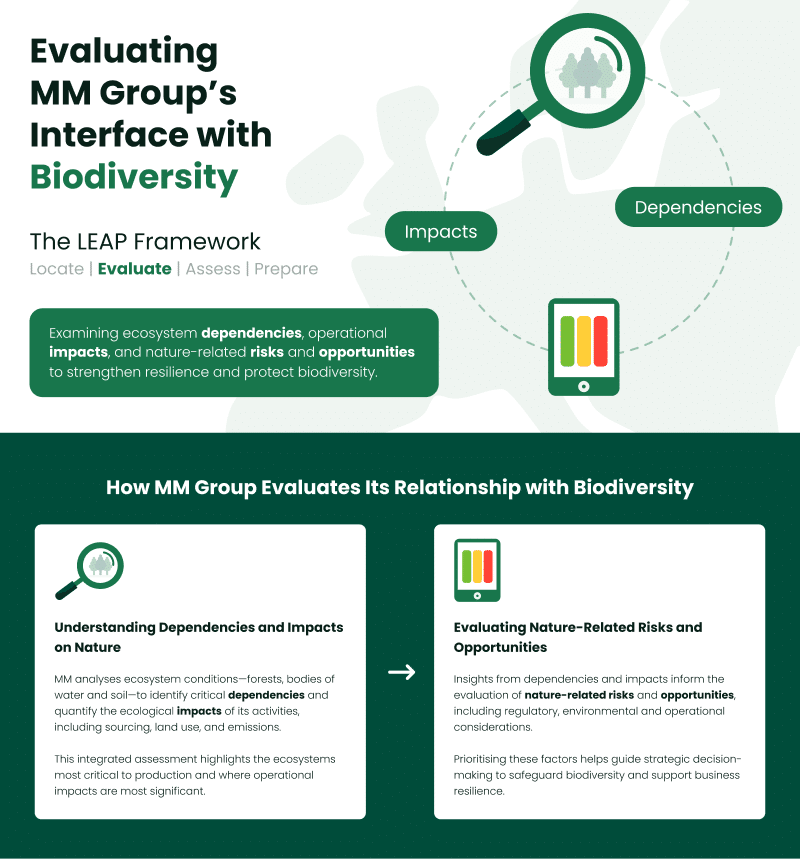
Evaluating MM Group’s Dependencies on Nature
For MM Group, the question of why biodiversity is important is evident, as most of the product portfolio originates from nature. Wood fibre, the foundation of many packaging solutions, depends on resilient, well-managed forests. Healthy ecosystems also provide essential services such as water purification, soil fertility and carbon storage.
Through the TNFD “Evaluate” phase, MM identifies and assesses several key dependencies:
- Forests: raw material supply depends on sustainable forest management. Forests also provide climate regulation and habitat connectivity, which mitigate the loss of biodiversity.
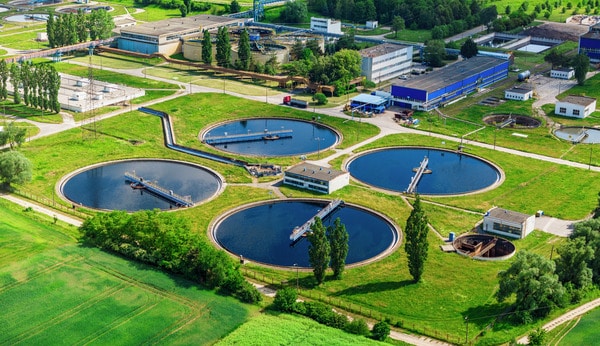
- Water: each mill relies on a steady supply of clean water. Monitoring the condition of local water bodies ensures production continuity while protecting aquatic biodiversity.
- Soil fertility: the vitality of forest ecosystems is rooted in soil health. Degraded soils threaten tree growth, demonstrating how organisms depend on each other in an ecosystem.
These dependencies vary by geography. Evaluations consider local context, such as whether a sourcing region overlaps with biodiversity hotspots, protected landscapes or vulnerable water basins.
Evaluating MM Group’s Dependencies on Nature
In parallel, MM Group analyses how its activities affect nature across the value chain.
Key impact areas include:
- Land use: forestry and manufacturing can alter habitats. MM evaluates how to manage sourcing practices and mill activities to reduce impact on local flora and fauna.
- Emissions and effluents: MM also monitors air and water emissions to minimise potential harm to surrounding ecosystems and aquatic biodiversity.
- Circularity and recycling: the focus on renewable, recyclable materials reduces dependence on fossil-based resources and mitigates biodiversity loss associated with waste and pollution.
Through this lens, today’s impacts shape tomorrow’s dependencies: the health of ecosystems today determines the resilience of MM’s operations tomorrow.

How MM Group Conducts the TNFD “Evaluate” Phase
The “Evaluate” phase is a structured, data-driven process built on scientific analysis, stakeholder engagement and transparency. It can be summarised as follows:
1. Data Collection
Analysts collect site-specific and supply chain information, covering ecosystem conditions, species presence, wood use and land cover. These data are supplemented by external sources such as remote sensing and environmental databases.
2. Materiality Assessment
Dependencies and impacts are prioritised through an impact materiality approach, consistent with ESRS standards. This ensures that the most relevant topics for both operations and nature are addressed in annual reporting. For example, wood-sourcing areas overlapping with biodiversity hotspots are treated as highly material.
3. Tools and Methods
MM Group applies both qualitative and quantitative methods. On an operational level, qualitative assessments identify nature dependencies and risks. On a geographical scale, quantitative tools — such as the digital platform refinq, based on TNFD LEAP logic — visualise dependencies, evaluate risks and inform decisions.
For example, if a mill is located near a river, the analysis assesses both its dependence on clean water and the potential effects of operations on aquatic biodiversity downstream.
Why TNFD “Evaluate” Phase Matters
Leveraging an expert understanding of nature-related dependencies and impacts supports long-term business success. For MM Group, the TNFD framework supports several strategic objectives:
- Resilience: identifying critical natural dependencies safeguards the continuity of fibre supply and production capacity.
- Responsibility: evaluating impacts enables continuous improvement of practices, reducing environmental pressures in line with the company’s biodiversity action plan.
- Compliance: the evaluation process supports compliance with evolving regulations, including the EU Deforestation Regulation (EUDR), and contributes to voluntary initiatives such as TNFD, where MM Group’s leadership in early adoption can help mitigate the costly risks of non-compliance for customers.
- Trust: transparent, data-backed insights into biodiversity performance strengthen stakeholder confidence and demonstrate MM’s commitment to more sustainable business practices.
Further details on how biodiversity shapes MM’s sustainability strategy can be found in Biodiversity in Business: From Risk Recognition to Strategic Integration.
Integrating External Factors
The TNFD “Evaluate” phase also considers external environmental and regulatory influences that affect dependencies and impacts:
- Climate events: wildfires, droughts and storms can damage forests, disrupt fibre availability and alter long-term supply stability.
- Ecological stressors: natural disturbances such as pest outbreaks or disease can influence forest health and productivity.
- Regulatory changes: New conservation requirements or customer expectations, such as deforestation-free products, can reshape material risks and opportunities.
By integrating these drivers into the analysis, MM ensures its approach remains adaptive to changing environmental conditions. Protecting biodiversity is therefore not only an environmental priority but also an investment in long-term operational stability.
In conclusion, the TNFD “Evaluate” phase transforms the understanding of nature from something abstract to insights that help shape strategy at MM in a way that strengthens both biodiversity and business resilience.
Through systematic data collection, materiality assessment and continuous improvement, MM embeds nature considerations into its strategy and reporting. This approach advances sustainability goals while reinforcing the company’s role as a responsible steward of natural resources.