Meeting Customer Demand for Circular Packaging
Consumers increasingly expect packaging that closes the loop, with studies showing that recyclability and recycled content consistently rank among the top sustainability priorities globally. This demand is increasingly reflected in packaging design, where monomaterial cartonboard solutions designed to be recycled support circular flows by reducing complex laminates and boosting recycled fibre use. In Europe, where about 85-86% of cartonboard is already recycled, this reinforces the sector’s strong circular performance.
These developments are mirrored across industry trends, from fragrance packaging to food and drink packaging, as brands move toward lighter, single-material designs and refillable systems in response to both consumer expectations and regulatory pressure. It is also important to emphasise that recycled cartonboard is an essential building block of a true circular economy. To help you navigate these shifts, this article explores current packaging trends, using MM data and insights to show how transparency and evidence can confidently strengthen your brand’s circularity claims.
Circular Packaging Trends in Food and Beverage
In the Food and Beverage sector, food packaging trends are driven by safety and sustainability. Refrigerated and frozen products increasingly use mono-material cartons and fibre trays. Consumers still prioritise shelf life and food safety, but nearly 4 in 10 Europeans now rate environmental impact “very important” when buying. Crucially, recyclability is seen as the top sustainability trait globally as well. For example, 20 percent of US cities support curbside recycling: consumers can now place paper cups in their household paper bins.
In practice, brands are responding by designing cartons for recycling in local paper streams and by lightweighting packaging. Packaging design trends like minimal lamination and fibre-based wraps reduce material use: less really is more when lighter designs cut costs and emissions. Deposit-return schemes are also widening beyond bottles into food containers.
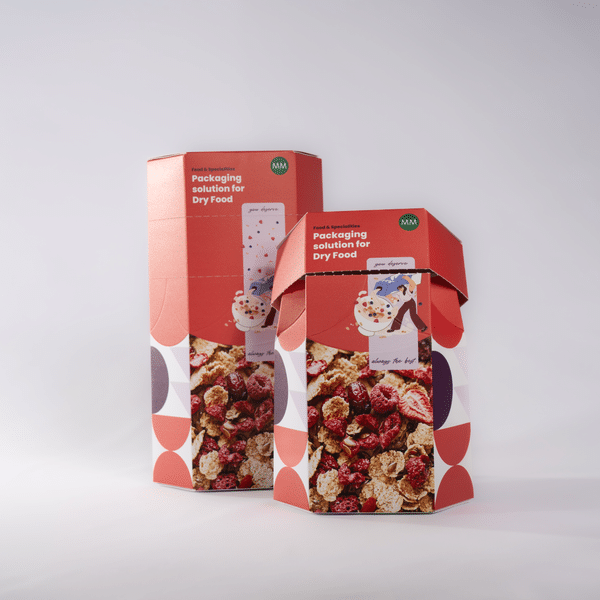
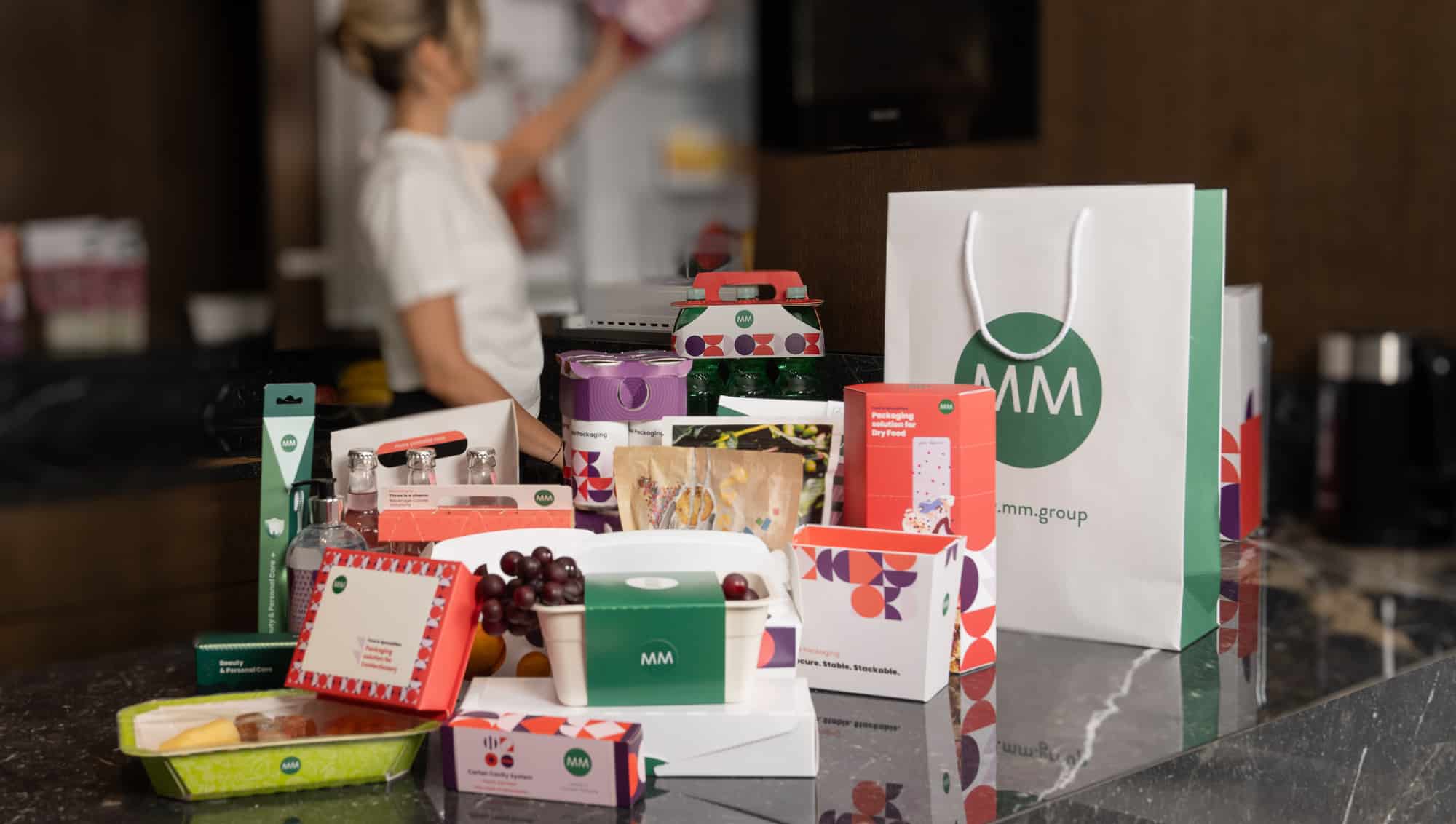
To help you meet this demand, MM Group offers monomaterial cartonboard solutions that use less plastic and more recycled fibres – and therefore are recyclable by design. The result gives your brand fully fibre-based trays or boxes that match the performance of plastic. For instance, your products can use MM’s recycled-fibre fruit baskets, which improve ventilation while replacing plastic inserts. By boosting recycled content, you partner with MM to help preserve wood and water resources.
Circular Packaging Trends in Beauty and Fragrance
In Beauty and Personal Care, sustainability trends are reshaping fragrance packaging and skincare packaging design. Luxury brands are shifting to refillables: a recent report finds 59% of luxury consumers now favour refillable or modular packaging, and over half will pay more for recycled or reusable materials. This reflects broader beauty packaging trends toward permanent, durable containers. For example, prestige perfumes now often come in glass or metal bottles built for multiple refills; a leading brand reduced bottle weight by 22% while raising recyclability.
Skincare products, likewise, are being packaged in simpler assemblies designed to be recycled (e.g., paperboard compacts instead of plastic). MM Group’s fibre expertise supports your brand here as well. By avoiding the use of synthetic polymer coatings, our grease-resistant boards work perfectly in high-end packaging while remaining compatible with recycling streams.
Tech trends like smart packaging (QR codes guiding local recycling rules) are emerging, but fundamental packaging circularity demands are already high. Consumers see packaging as an extension of brand values, so beauty brands tout sustainable packaging trends visibly. As a leading European producer of fibre-based packaging solutions, MM partners with your brand on refill programmes and recycled-content cartons to meet this demand.
Circular Packaging Industry Trends and Insights
Across all sectors, sustainable packaging trends point to one clear direction: lightweight, mono-material designs with verified circularity. Global surveys confirm that even if environmental factors rank below price/quality, a majority are willing to pay more for sustainable packaging. Younger and higher-income consumers especially drive this change. MM’s research echoes this: consumers prefer recycled materials and reward brands that optimise material use.
Regulation also accelerates change. The EU’s new packaging laws (PPWR) impose recyclability and recycled-content targets, effectively nudging packaging toward fibre-based alternatives. Meanwhile, the industry is preparing: packaging industry trends include developing hybrid boards (mixing virgin pulp with high-grade recycled fibres) and barrier coatings free of fluorinated polymers.
All reflect a data-driven approach: to help you design optimised cartons, MM provides life-cycle analyses and certified footprints. In short, the industry is embracing circularity not just as an ethos but as economics. Retailers, too, see consumer packaging trends favouring environmentally friendly packs: deposit-return schemes and recycling labels help close the loop. MM’s case studies (e.g., a carton with 100% recycled fibres) exemplify that your brand’s performance need not be sacrificed for sustainability.
As MM’s sustainability experts put it in a recent interview centred on the PPWR and the challenge of balancing lightweighting requirements with recyclability, collaboration and transparency are key: meeting consumer demand for circular packaging means working together across the value chain with solid data and innovation.