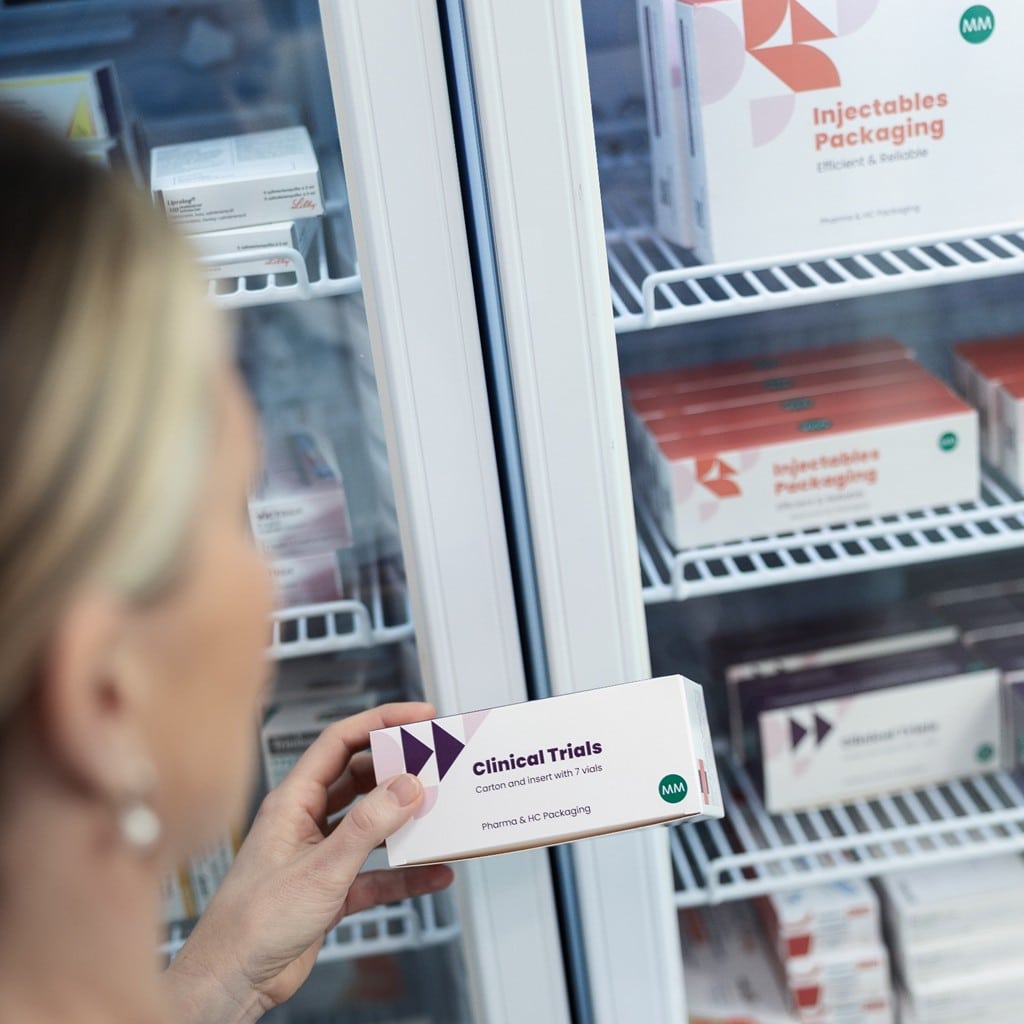
Designing pharmaceutical and clinical trial packaging with sustainability in mind
Sustainability considerations are becoming increasingly important across the pharmaceutical industry, influenced by evolving EU requirements on packaging and waste, ESG reporting expectations, and growing attention to environmental performance across the supply chain.
In clinical trials, however, packaging operates within a particularly demanding environment. Clinical supply chains involve multi-market labelling requirements, strict regulatory standards, tight timelines, and the non-negotiable need to protect investigational medicinal products at every stage. Environmental considerations therefore need to be integrated alongside these requirements, without compromising compliance, product integrity, or study timelines.
What does sustainability mean in clinical trial packaging?
In a clinical trial context, sustainability involves looking at where materials and resources can be used more efficiently while continuing to meet the technical and regulatory requirements of the study.
Material selection is one area to consider. Depending on the application, opportunities may include reducing unnecessary plastic content, evaluating materials with recyclability considerations in mind, and selecting paperboard and label materials supported by relevant certifications or documented environmental information.
Structural design also plays an important role. Reviewing pack dimensions and avoiding unnecessary packaging volume can help reduce the amount of material required while supporting efficient storage and transportation.
Another important aspect is life cycle thinking: considering packaging from production and distribution through to its use and eventual disposal at clinical sites. This broader perspective can help identify opportunities that a component-by-component approach may overlook.
At the same time, any changes to materials or packaging formats must continue to meet the requirements of the specific application, including product protection, tamper evidence, labelling accuracy, traceability and Good Manufacturing Practice (GMP) principles. Environmental considerations can only form part of a viable clinical packaging solution when these fundamental requirements continue to be met.
How can clinical trial packaging help reduce unnecessary material and waste?
One practical starting point is elimination: identifying packaging material or volume that is not required for the intended function.
This may include right-sizing cartons and wallets to the product they contain, reviewing secondary packaging formats, and designing out components that do not add a necessary functional or regulatory benefit.
Planning can also play an important role. Aligning packaging quantities as closely as possible with study requirements can help limit unnecessary surplus, particularly when supported by flexible production capabilities and appropriate demand planning.
Getting the packaging design right early in the process is equally important. Considering regulatory, operational, material and study-specific requirements from the beginning can help avoid unnecessary redesigns and make more efficient use of resources.
Rather than treating sustainability as a separate objective, these considerations can form part of a broader approach to efficient clinical packaging design.
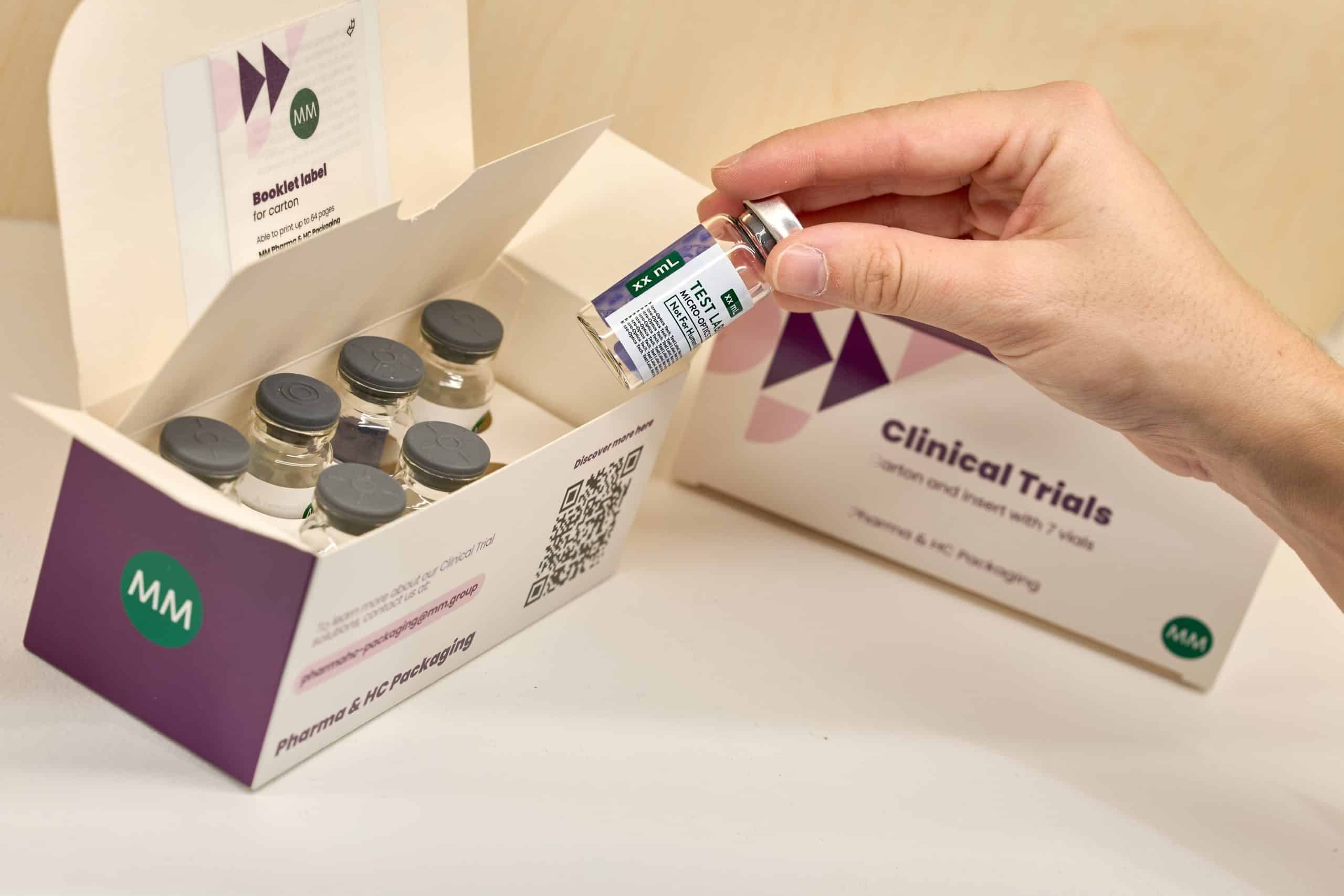
The role of expertise in pharmaceutical packaging design
Integrating sustainability considerations into clinical trial packaging requires an understanding of the regulatory and technical constraints that determine what is appropriate for each application. A material or format cannot be considered a viable alternative if it does not meet the performance and regulatory requirements of the product and study.
Structural design expertise is therefore essential when exploring opportunities to use materials more efficiently while maintaining packaging performance. Experience in clinical trial packaging is equally important, given the particular requirements around quality, traceability, adaptability and regulatory compliance.
Clinical packaging delivered by an experienced partner should be designed to work effectively within the trial environment, taking into account site-level handling, required validation and the potential for protocols or study requirements to evolve.
For this reason, sustainability considerations are most effectively addressed early in the packaging development process, alongside product protection, regulatory requirements, operational needs and study timelines.
To explore how MM Pharma & Healthcare Packaging approaches clinical trial packaging, visit the Clinical Trial Packaging Solutions page.
Bringing sustainability considerations into clinical trial packaging
Environmental considerations are becoming an increasingly relevant part of pharmaceutical packaging decisions, alongside the established requirements for quality, compliance, product protection and operational efficiency.
For clinical trials, the objective is not simply to use a material described as more sustainable. It is to examine the packaging system as a whole and identify where unnecessary material and complexity can be avoided while continuing to meet the specific requirements of the study.
By integrating these considerations early in the design process, opportunities to use materials and resources more efficiently can be explored alongside the exacting demands of clinical supply.
MM Pharma & Healthcare Packaging combines pharmaceutical packaging expertise with structural design and clinical supply experience to help customers evaluate packaging solutions according to the requirements of their individual studies.
If you are exploring ways to incorporate sustainability considerations into the packaging strategy for your next clinical study, contact MM Pharma & Healthcare Packaging to discuss your requirements.

Do you want to keep finding us easily on Google?
Add us as a preferred source and give our content greater prominence when searching for information on Google.