Pharma trends & smart packaging: How innovation is shaping the future of healthcare
The pharmaceutical industry is undergoing change. The forces driving it are well understood, and include ageing populations, the growth of biologics and specialty medicines, increasing regulatory scrutiny, and the accelerating move towards personalised therapies. However, the combined effect of these changes on operations, supply chains, and packaging, is still working its way through the industry.
Among the latest trends in pharma is the move towards personalised medicine. As treatments become more targeted, production runs shrink, formats diversify, and the complexity of managing multiple SKUs across multiple markets increases considerably. Where a manufacturer might once have produced a single product in large volumes for a mass market, they may now be managing dozens of variants, each with its own labelling requirements, regulatory profile, and packaging specification.
Flexibility has become just as important as scale. Pharma industry trends around on-demand manufacturing, direct-to-patient distribution, and shorter shelf-life biologics all place new demands on packaging operations. These are demands that traditional approaches, built around long runs and standardised formats, were not designed to meet. Understanding these pharma trends is the starting point for understanding why packaging is changing so quickly, and why smart solutions are becoming central to the answer.
How is smart packaging responding to pharma industry trends?
Smart packaging has switched from a trade show concept to a practical response to real operational challenges. The pharma industry trends of shorter runs, greater complexity, and tighter traceability requirements, are precisely where smart packaging solutions demonstrate the most value.
On the compliance and traceability front, serialisation requirements under the EU Falsified Medicines Directive and the US Drug Supply Chain Security Act have established an expectation that packaging carries unique, verifiable product identifiers. Smart packaging builds on that baseline, extending traceability from the production line through to the point of dispensing and beyond, giving manufacturers and supply chain partners a real-time view of where an individual product is, whether storage conditions have been maintained, and whether any intervention is required.
For manufacturers dealing with flexible production runs, smart packaging solutions offer agility. Labels and cartons that carry digital identifiers can be adapted to different markets, formats, and language requirements without the lead times and tooling costs associated with conventional format changes. The packaging becomes, in effect, programmable. The physical format stays consistent while the digital content adapts to the requirement. This positions smart packaging not as a premium add-on but as an enabler of the operational agility that current pharma industry trends are making essential.
What are the most important smart packaging technologies in pharma today?
The smart packaging technology market in pharma has matured considerably, and a clear picture has emerged of which technologies are delivering practical value at scale.
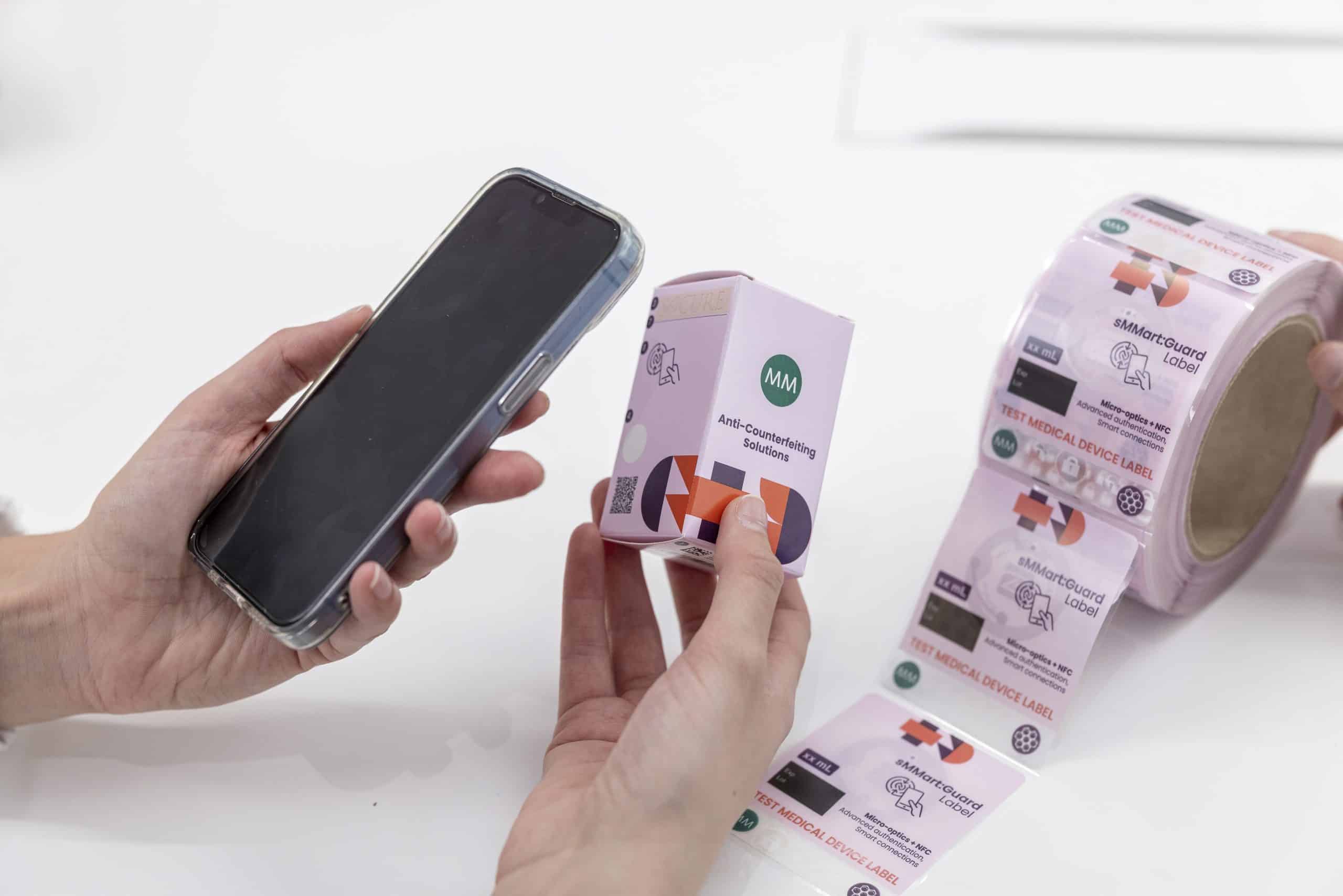
NFC (Near Field Communication) is one of the most widely adopted, in part because it requires no specialist scanning equipment. Almost every modern smartphone can read an NFC tag. For pharmaceutical applications, this creates new possibilities across patient engagement, authentication, and supply chain monitoring. Patients can scan a pack to verify authenticity, access instructions, or receive reminders linked to their treatment schedule. Manufacturers can use the same technology to track product through the supply chain and gather data on usage patterns that inform both clinical and commercial decisions.
Critically, MM Pharma & Healthcare Packaging encodes NFC chips in-house within a high-security environment, ensuring complete data integrity throughout the process. This is a capability that not every packaging provider can offer.
RFID (Radio Frequency Identification) supports inventory management and logistics tracking with a level of speed and accuracy that manual processes cannot match. For temperature-sensitive products, such as biologics, vaccines, and a growing range of specialty medicines, time-temperature indicators integrated into labels or cartons provide a continuous record of storage conditions. This gives everyone in the supply chain confidence that product integrity has been maintained.
These smart packaging solutions share a common characteristic: they transform the packaging from a passive container into an active participant in the supply chain. The pharma packaging trends pointing towards greater data connectivity, tighter regulatory oversight, and more demanding patient expectations, are all pulling in the same direction. These technologies are the practical means of getting there.
Why smart packaging solutions are critical for the future of pharma
The case for smart packaging solutions is no longer just about competitive differentiation. It is about keeping pace with where trends in pharma are moving, and with what regulators, patients, and supply chain partners are increasingly expecting.
Regulatory frameworks continue to tighten while traceability and serialisation requirements expand in scope and geography. Counterfeit medicines remain a significant global problem, costing the industry billions annually and, more importantly, placing patients at risk.
Smart packaging solutions address both concerns simultaneously. They support compliance by providing verifiable, tamper-evident product identifiers, and they deter counterfeiting by making authentication accessible at every point in the chain. At the operational level, the move towards more complex, multi-market product portfolios makes the data capabilities of smart packaging increasingly valuable. Real-time visibility of product location and condition, faster identification of anomalies, and better integration with digital manufacturing systems all reduce waste, reduce risk, and accelerate time to market.
Conclusion: from pharma trends to smart packaging innovation
The pharma trends that are reshaping the industry, including personalised medicine, regulatory complexity, supply chain scrutiny, and patient empowerment, are not slowing down. The packaging for pharmaceutical products must keep pace.
Smart packaging is the bridge between where the industry is going and the realities of getting there. It supports compliance, enables traceability, improves patient engagement, and delivers the flexibility that modern pharma operations require. Companies that have integrated smart packaging into their operations are better positioned to respond to whatever comes next.
MM Pharma & Healthcare Packaging has built its smart packaging capabilities around exactly these requirements, from NFC-enabled labels encoded in-house to carton solutions that combine physical security with digital functionality.
If you are exploring how smart packaging solutions can support your specific needs, the MM Pharma & Healthcare Packaging team is standing by to assist – get in touch today.