How barrier coatings are expanding the role of recycled cartonboard

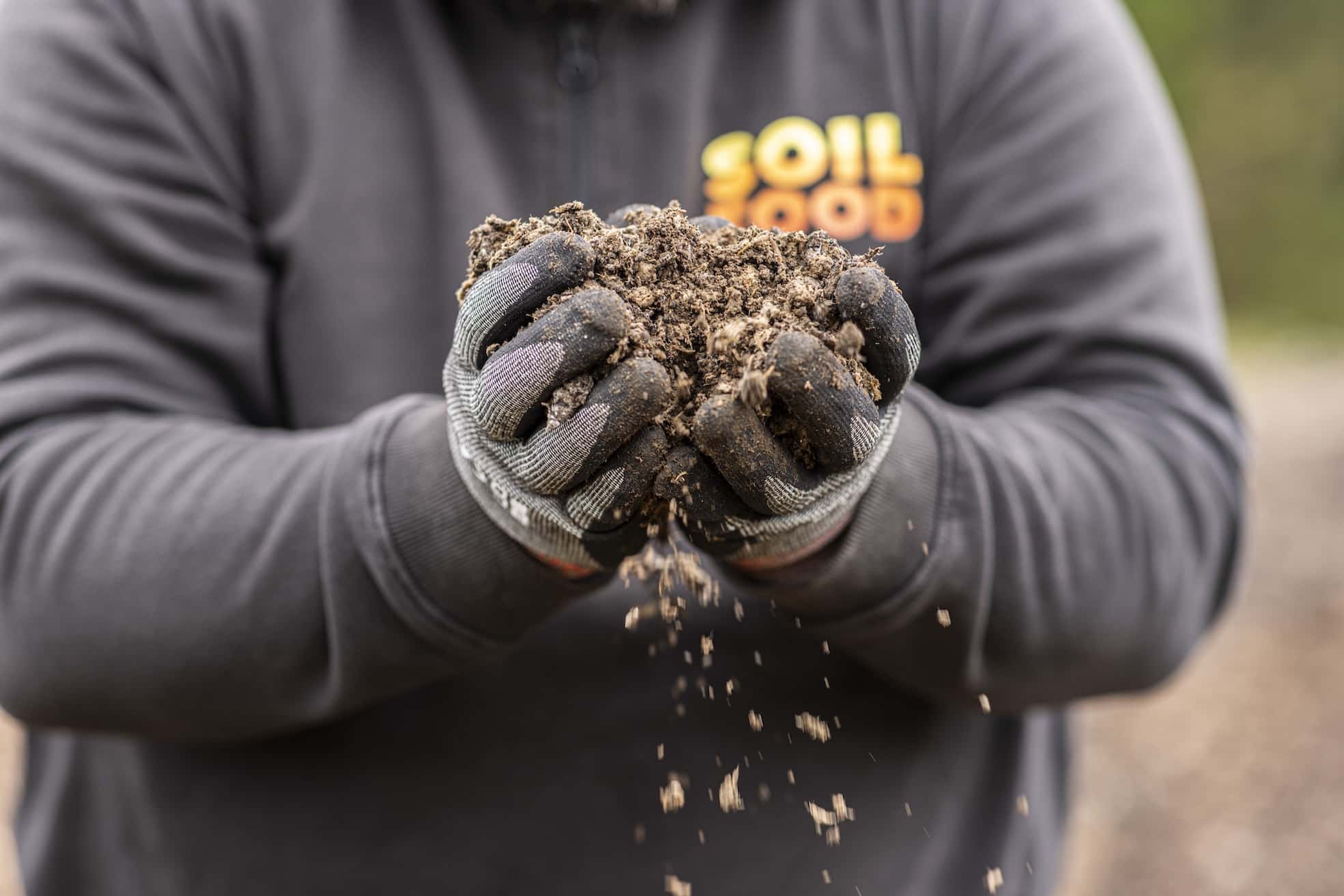
White lined chipboard (WLC) already plays a central role in Europe’s circular packaging system. Made from recovered fibres and supported by well-established recycling streams, it is a material with strong potential for further development. From an R&D perspective, a key challenge is to find new ways to enable recycled fibres to play a greater role in the context of increasingly demanding packaging applications.
Today, that opportunity is greater than ever. Advances in barrier coating technology enable WLC grades to be used across a wider range of applications in both the food and non-food sectors while keeping valuable fibres in circulation. This progress shows the versatility of recycled cartonboard – and shows how much potential still lies ahead.
What do ‘barrier coatings’ mean in packaging?
Barrier coatings are often described in simple functional terms, but their impact goes far beyond that. They are engineered layers or surface treatments applied to cartonboard to deliver specific performance beyond printability. In practice, this can mean resistance to grease and moisture, as well as protection against the migration of unintended substances like mineral oils. Where plastic laminates or metal foils once dominated, barrier-coated cartonboard solutions are increasingly offering a more circular alternative that better supports material recovery and reuse.
Why is recycled cartonboard a strong base for barrier coatings?
Applying barrier coatings to WLC expands its suitability into more sensitive packaging segments. Grease- and moisture-resistant surfaces support applications such as frozen foods, chilled goods, bakery and foodservice packaging that previously relied on plastic-laminated or otherwise polymer-rich structures. Carefully designed barrier systems can also shield the migration of mineral oils and other unintended substances into packed dry goods, ensuring compliance with food safety requirements.
Because WLC is based on high-quality recovered fibre streams and can be recycled multiple times, it provides a strong foundation for barrier development and for maximising recycled content in more demanding packaging. As part of the most established recycling stream in the packaging sector – more than 60 million tonnes of used paper are collected across Europe each year – recycled cartonboard is well aligned with growing expectations around recyclability. With 87% of consumers expressing confidence that paper and cartonboard will be recycled, it is a strong material choice for brands looking to combine packaging performance with circularity. Expanding its use in barrier applications should therefore remain a priority for the industry.

Understanding the limits of barrier functionality
Development also means being clear about the limits. For products with very high barrier demands, such as liquids, or for applications where the packaging is repeatedly exposed to moisture, even advanced barrier coatings on fibre-based products may not deliver the same performance as alternative material solutions. In addition, recycled fibre cartonboard has inherent constraints regarding strength and uniformity compared with certain virgin fibre boards, which can limit ultra-lightweight constructions or very heavy-load applications.
Recyclability must also remain central in all developments. While paper and board benefit from well-established collection and recycling streams, certain barrier constructions – particularly conventional laminates – can reduce fibre recovery or increase processing complexity. That directly weakens the circular value proposition of WLC.
For that reason, our focus is on barrier concepts that work with existing recycling systems, not against them. Performance improvements that compromise recoverability are not the right path forward.
Balancing performance with practicality
Barrier innovation cannot exist in isolation; it must also be viable from an economic and operational perspective. Advanced chemistries, converting requirements and process adjustments at both mill and converter level may all introduce additional cost and complexity, and these factors must be considered carefully.
For this reason, development must be targeted. At MM Board & Paper, we combine technical expertise with detailed market understanding, focusing on applications where barrier functionality creates clear added value – whether through improved product protection, a more efficient packaging solution or compliance with evolving regulatory requirements. The goal is not innovation for its own sake, but innovation that solves practical challenges for customers.
Driving innovation at MM Board & Paper
At MM Board & Paper, our approach to barrier coatings is rooted in expertise across both virgin fibre and recycled cartonboard. This comprehensive knowledge helps us develop solutions that are closely matched to specific application needs, rather than relying on one-size-fits-all concepts.
This work is supported by our R&D centres at the mills, where product development and testing are closely linked to production realities. As part of MM Board & Paper’s innovation approach, these centres contribute to a structured process that moves ideas from evaluation and technical development to implementation and launch. In barrier development, that close link between laboratory work, mill expertise and knowledge of market requirements is essential.
A key focus for us is the advancement of water dispersion coating technologies, which support the development of high-performance, recyclable barrier solutions compatible with existing paper recycling systems. These innovations are opening new possibilities for fibre-based packaging without undermining circularity.
Collaboration is just as important. We work closely with customers across food and non-food segments to develop solutions that are precisely tailored to their needs. Building on our experience in migration protection, including established solutions such as FOODBOARD®, we continue to face evolving regulatory and safety requirements with confidence.
Ultimately, every barrier solution must perform in practice, integrate into existing systems and support the circular economy. That is why our barrier cartonboard grades are designed for recyclability and are independently assessed using the CEPI method, helping to ensure that innovation strengthens, rather than compromises, the circular systems on which fibre-based packaging depends.