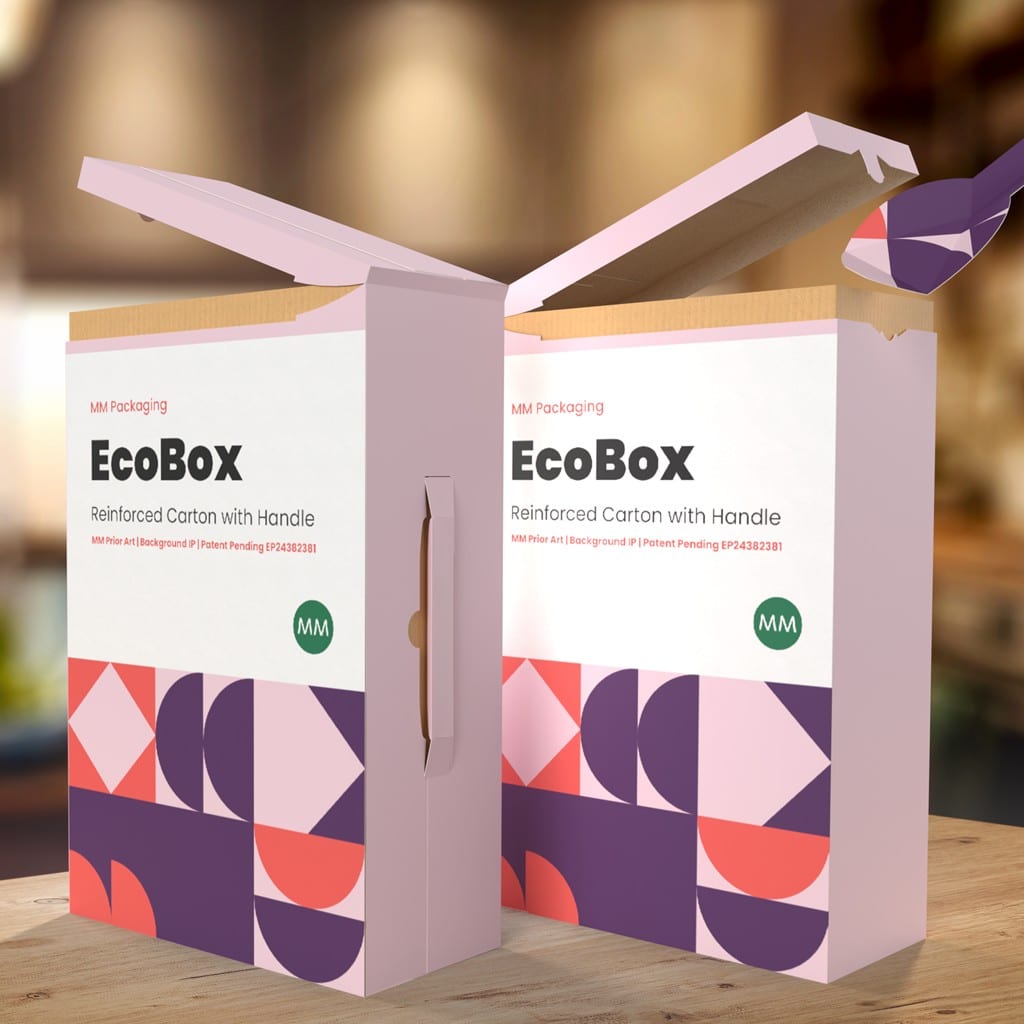
The next chapter of detergent packaging: Designing for a more circular future
Henkel, a name familiar in households worldwide, made history in 1907 with the invention and launch of the first self-acting detergent.
Today, we still know this household brand as ‘Persil’. Back then, detergent was packaged in a humble paper bag, far from the complex plastic-based formats we see today. However, the mixed material structures commonly used for powders and liquids increasingly raising environmental concerns that extend beyond the benefits they provide. Did Henkel have it right first time? Have we come full circle and is fibre-based packaging the answer?
In short, yes. Technical advances in fibre-based packaging engineering now mean that the material can bear the weight of standard domestic and commercial cartonboard detergents. Instead of plastic handles and metal rivets that consumers find near impossible to remove and MRFs (Materials Recovery Facilities) find difficult to separate, fibre-based handles can be integrated directly into the cartonboard boxes. And, if engineered correctly, can safely hold loads of up to 7kg in weight.
No additional effort for consumers. Zero MRF facilities sending fully recyclable cartonboard packaging direct to landfill. Detergent packaging has simply met its match.
Meeting PPWR and EPR legislative requirements
The beauty of fibre-based packaging is that it’s much easier for detergent brands to meet current and future legislative requirements enforced under PPWR (Plastic and Plastic Waste Regulation) and EPR (Extended Producer Responsibility). If brands continue to use mixed material non-recyclable formats and multi-layer plastic packaging, it could have major financial implications and significantly affect commercial sales and brand reputation.
For detergent brands, making the switch to a fibre-based cartonboard packaging design just makes business sense. After all, it certainly worked for Henkel.
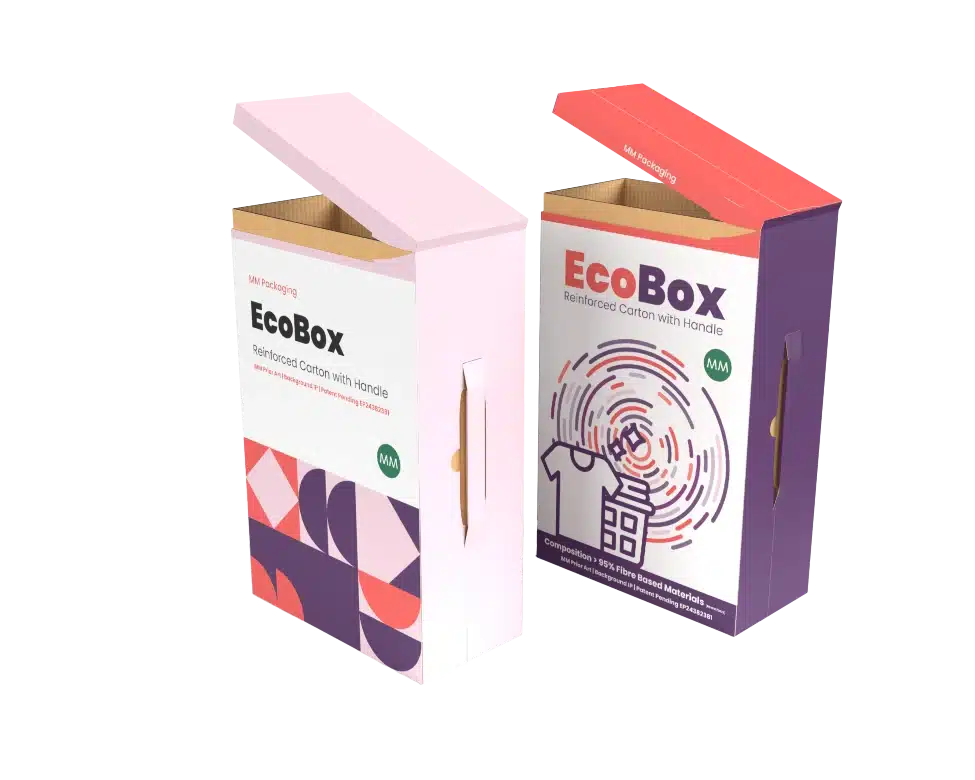
Fibre-based innovation begins at MM Packaging
Detergent brands have one additional challenge we’ve not yet covered: plastic dosing cups. If brands are to meet a minimum percentage of cartonboard by 90% by 2030, most standard detergent products with a plastic dosing cup included would fail to meet those requirements today.
Meet EcoBox. An MM Packaging innovation, which is constructed from 95% of fibre, has the dosing spoon built directly into the cartonboard design. It can be moulded easily into a scoop shape and then discarded in household recycling bins alongside the detergent box when finished. Each new pack bought comes with a new dosing spoon as standard, an integrated fibre-based handle and a tear-strip hinged opening.
As a global leader and supplier of fiber-based packaging, it is our engineering and technical capabilities that enabled us to design an integrated fiber-based handle on our detergent cartonboard boxes, safely supporting loads up to 7kg.
For detergent brands, EcoBox is also completely compatible with your existing production lines. Some would say this is a perfect match.
Download our whitepaper to learn more about the future of fibre-based detergent packaging and how EcoBox can help meet your circular design requirements.